Showing posts with label words. Show all posts

4.27.2010

Working from home, Tip #47

The greatest advantage - and the greatest pitfall - of working at home is not keeping a regular 9-5 schedule. It means that if I want to take a yoga class on Wednesday morning, I can catch up by simply working a few extra hours on Tuesday night.

The pitfall is that, sometimes my brain gets so tired from a full day of working with words, that it isn't as sharp after 6pm.

My solution? Doing something manual to help my brain reboot.

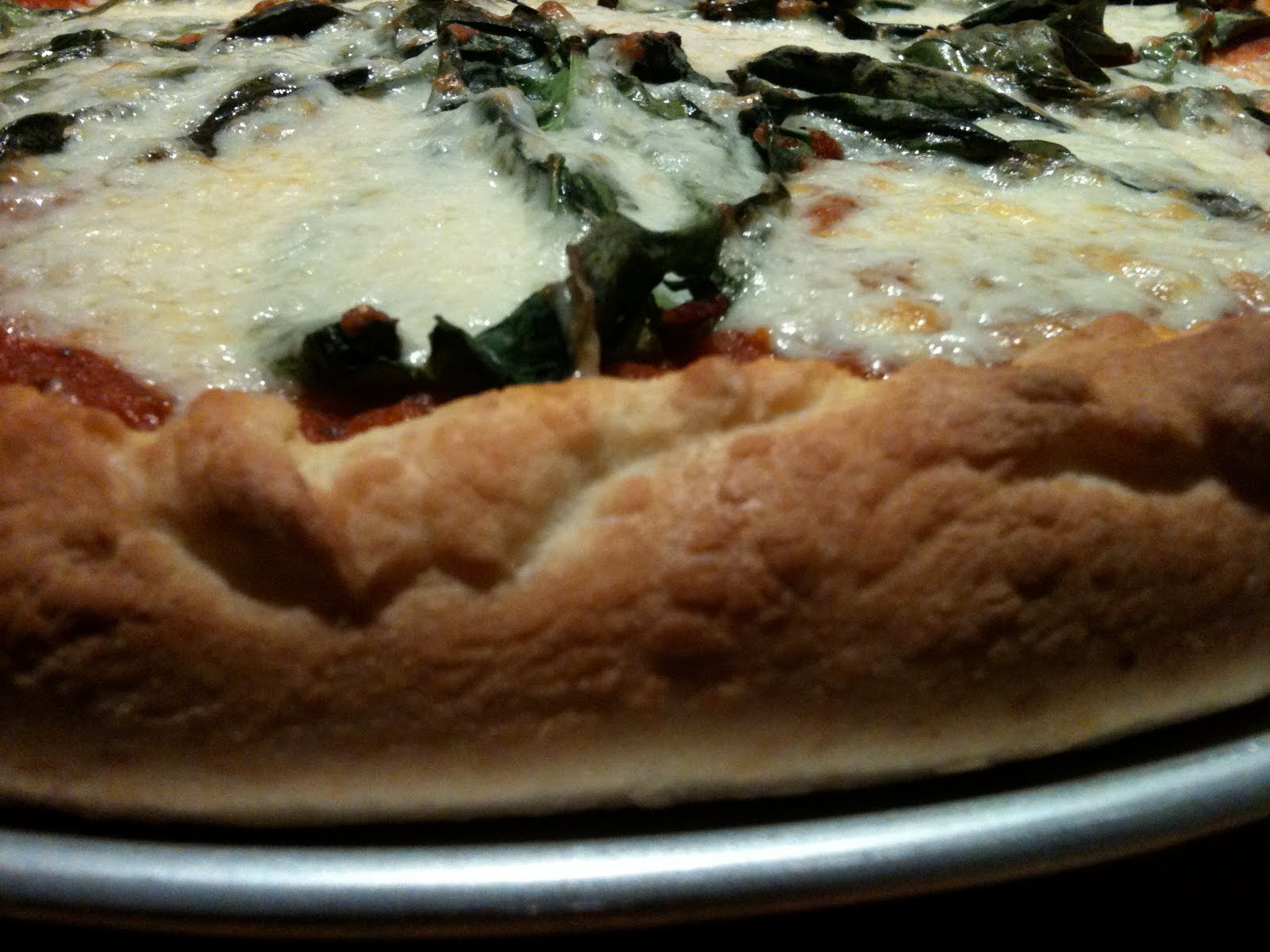
To rest the intellectual-wordy part of my brain, I made pizza. From scratch. I kneaded the dough and let it rise twice. I made tomato AND pesto sauce from fresh ingredients. And then while my pizza bubbled in the oven, I washed all the dishes.

I returned to my keyboard a few minutes ago feeling clear-headed and fresh - ready to tackle the short translation and revision that awaits.

Heck, I even squeezed out a blog post. With photo!

3.11.2010

Meeting your fictional characters

Remember that yoga workshop I told you about?

Something else remarkable happened that day but I only realized it yesterday. There was someone in the room whose face and way of speaking kept drawing my attention. I can't even say that it was sexual - there was just something very familiar about this man's face.

I was riding the metro yesterday when I realized.

This man is close to what I imagine Cedric to be, both physically and emotionally. Who's Cedric? A character in the novel I'm working on, of course.

The relationship between writer and fictional character is very intimate. You have created this person with feelings, motives and ambitions, someone with a history and a future. Although you understand that this character is fictional, you know this person in a profound way that cannot often be replicated in real human relationships.

I often have to remind myself that Reggie did not exist, that Cedric is not real. If I am walking in the old financial district, I have to curb my brain from blurting out, "Mr. Campbell probably worked in this building."

So, understandably, meeting an actual person who fully embodies your image of a fictional character causes a very real ripple in your emotional day. On the one hand, it's exhilarating to "meet" your fictional character. On the other hand, it could interfere with your ability to go back and write him with authenticity. I don't want to have this person in my head when I'm writing Cedric, because I don't want to inadvertently start writing this other person. I want to keep Cedric true to Cedric.

Let me end with this, some words from a letter written by Jane Austen to her sister Cassandra in 1813:

"Henry and I went to the exhibition in Spring Gardens. It is not thought a good collection, but I was very well pleased, particularly (pray tell Fanny) with a small portrait of Mrs. Bingley, excessively like her.I went in hopes of seeing one of her sister, but there was no Mrs. Darcy. Perhaps, however, I may find her in the great exhibition, which we shall go to if we have time . . . Mrs. Bingley's is exactly herself -- size, shaped face, features, and sweetness; there never was a greater likeness. She is dressed in a white gown, with green ornaments, which convinces me of what I had always supposed, that green was a favourite colour with her. I dare say Mrs. D. will be in yellow."

The portrait Austen refers to (left) is actually of a Mrs. Quentin, painted by Huet Villiers, but any Austenian will tell you - she's the spitting image of Jane Bingley.

2.02.2010

Book list for 2010

For 2010, I've decided to keep a list of the books I read. Ed did it, and so did Steve. I like the thought of recording what I've read - to remember which titles I liked, to share favourites with friends and to spark new discussions. I have to remember to add an asterisk to those I really like.

So far, I've read:

*Vincent Lam, Bloodletting & Miraculous Cures
*Joseph Boyden, Through Black Spruce
*Markys Zusak, The Book Thief
*Claire Holden Rothman, The Heart Specialist

That none of them are deserving of an asterisk is not a surprise. I'm a very demanding reader, so there probably won't be many by year's end. To get an asterisk, the book will have to be stellar from beginning to end.

What is remarkable is that there are already two books that were so boring, I didn't finish them.

When I was younger, I slogged through books - no matter how bad. These days, I've decided that time is too precious to be wasted on books that don't catch my attention within the first 100 pages. To ensure a better reading experience, this week I picked up some sure-to-please writers at the library - Alice Munro and Barbara Kingsolver. Here's hoping for an asterisk soon!

1.05.2010

Knowing your writing process

I've been talking about writing a lot lately.

Not only because people want to know what I'll be doing over the next few months, but also because I want to know more about my writing process.

I intend to make this new venture a success, so I need to know as much as I can about my process. Having this information will help me to:
  • create a fair balance between freelance writing and creative writing
  • make optimal use of the time dedicated to creative writing
  • not put undue pressure on myself about creative output (or lack thereof)
When it comes to the creative process, I don't do outlines and I can't tell you how any story will end. I simply begin with a moment or character, and start writing from there. I make decisions as the story develops, usually by asking myself specific questions.
  • What would Character A do in this situation?
  • How would Character B react to this statement?
  • What happens next?
I trust in the process. If I let the questions sit for a few days, the answer will always appear. In the rare case that it doesn't, it usually means that the idea is not worth pursuing after all. This applies to the blog writing as well.

I'm also planning the writing according to my most creative hours of the day. That's why most afternoons between 2-5pm are dedicated to errand-running, email answering and napping.

So far it's been rolling along smoothly enough. My big struggle? Being patient when I want the answers to my questions and they're not finished brewing yet.

I'm really curious about your writing process. What works for you? What are you struggling with? I've started writing with another talented writer friend - have you attempted it? Did it help or hinder the process?

12.16.2009

Unsent

The nice thing about going through a major life transition is that it provokes you to do a massive clean-up in all aspects of your life.

Wallets get re-organized.
Email boxes get streamlined.
Underwear gets triaged and replaced.
Kitchen cupboards get emptied and repapered.

Much has been done so far in the great sweep of winter 2009. I even got new pajamas. But the most entertaining part of this process (other than the retail therapy) has been finding unsent letters. Two so far in the last week.

The one I found in my email account was written at the end of a relationship, and it described my non-negotiables for future boyfriends. The tone was firm, but a little sad too.

The second, found in my draft blog posts, is a long tirade written after another man told me that men find me intimidating because I'm smart. It's fairly accurate to say I was angry in that one. *ahem*

I won't divulge the contents of these unsent letters, after all they were written for cathartic purposes. They were never written to be read. I only scanned them myself. It seemed almost too personal. Like I was reading the private words of another woman.

Nonetheless, I didn't delete them. There's no chance that I'll ever publish them, but I figure they'll be good reminders if ever I need them.

So do you have unsent letters? Why are you holding on to them? What are they an important reminder of?

12.08.2009

So I quit my job today

My friend Dina summed it up best, "A wise woman knows when to pick up her pencil and go".

Today, I officially handed in notice at 90 Degrees and negotiated my last day of work - Friday, December 18. Although I'm going to miss my coworkers, it was obvious to all that I was no longer engaged with my work.

The only thing I'm worried about is... who's going to water the plants?

What's next:
  • Writing.
  • More yoga teaching. A return to tango.
  • Returning bravely to the freelance world.
Wish me luck!

11.16.2009

Things you miss when you work 9 to 5

Now that I’m on my three-day schedule, I’m amazed at all the new discoveries I make every Monday and Friday. Here’s a list of stuff from today:
  • The play of late morning light in my kitchen or early afternoon light in the bedroom.
  • Watching kindergarten children have a leaf fight outside a local school, their educators showing them how to gather and throw the piles.
  • Reading a good novel on the terrasse of Olimpico, the sun warm on my face and coffee-flavoured froth warming my lips.
  • Discovering that the corner café I thought was permanently closed is actually open on weekdays.
  • Seeing what my mailman looks like.

11.01.2009

Space to write

I've spent the last two weeks preparing a short story for the CBC Literary Awards.

I started with an initial character and began building slowly, collecting the ideas as they came in during long walks, good meals or extended backbends. Moments in which I felt "stuck", I turned to The Space Captain, a fellow writer who asked the right questions and offered valuable input.

I sent off my submission on Friday and although there's no way of knowing how it'll perform during the judging, I did learn some valuable lessons worth sharing.
  • Talking things out. Writers tend to be a superstitious lot. Sometimes we don't want to talk about what we're working on because we're (a) worried about scaring off inspiration, (b) already worrying about being judged, or (c) paranoid about ideas being stolen. But as the Space Captain pointed out, you don't write for the ego - that's what therapy is for. You write for art's sake, so give yourself the tools to make the best possible art. Not sure why you're stuck? Can't make a storyline work? Ask another writer - someone whose work and opinion you respect.
  • Checking in. Be open to having the writer friend call in to check on you every now and again. Some writers hate the pressure of being asked how the writing is progressing, but once again, writing is not about the ego. It's hard work and diligence and discipline. Having a fellow writer call and ask how things are is no different than having an office colleague check on the progress of a project you're both working on, i.e. just part of the process.
  • Accepting criticism. And sometimes we don't like having our writing judged either (see comment about ego above). Writing is a process. Almost no one can write a publication-worthy story on the first draft and if you don't have a subjective pair of eyes look over - and comment - your text, it never will be publication-worthy.
  • Creating space. Thanks to my commitment to the writing, my new work schedule and the yoga practice, I finally feel as if I have space enough for writing. I can't remember what busy and distracting thoughts were filling up so much of my time previously, but I have finally made enough space in my head to accommodate the writing process. I'm going to have to work hard to keep it open, but without that ego-free space, I wouldn't have been able to finish that story on time.
I know some writer friends might be reading this. Any thoughts you'd like to share about your process?

10.16.2009

The writing life

As you may have previously read in this space, I am now working a three-day week. Today was my first full day at home -- and besides taking snaps of the last roses of the season -- it has been a very productive day.

I did the laundry while moving sentences around in my head.
I wrote the middle of the short story long-hand.
I walked downtown while organizing the verbal movements of hands in a broom closet.
I took a lunch-time yoga class.
Lunch!
I wrote the end of the short story long-hand.
I napped.
And now I'm blogging.

The short story is no where near being finished. It's a skeleton to which I must add -- over the next few days -- muscle, tendon, and skin. And yet I couldn't be more satisfied with my day because I was fully immersed in the writing life.

The writing life is about time. So much needs to happen in your head before you put the words down. A writer needs time to let the ideas sit, evolve and change. Adjectives must be weighed. Scenarios played out to every possible denouement. Then when you're ready, you need the time to find the words that most accurately describe your vision.

Good, satisfying work, that's what I did today.

9.27.2009

On the reading pile

I'm actually reading three books at the same time. I don't do this very often, but the three selections are so varied, it feels alright.

Zen and the art of motorcycle maintenance by Robert M. Pirsig

Written while I was still happily gestating in my mother's belly, this classical philosophical text remains relevant despite the 30+ intervening years. It's been an enjoyable read for two reasons: (1) it hearkens back to my university days when philosophy became a sudden new passion, and (2) I feel particularly smart when I understand some complex idea.

Favourite quotes so far:
Stuckness shouldn't be avoided. It's the psychic predecessor of all real understanding.

You are never dedicated to something you have complete confidence in. No one is fanatically shouting that the sun is going to rise tomorrow. They know it's going to rise tomorrow. When people are fanatically dedicated to political or religious faiths or any other kinds of dogmas or goals, it's always because these dogmas or goals are in doubt.

Shantaram by Gregory David Roberts

I admit it - at one point, I was India-ed-out. I had just read a series of novels set in India, and I couldn't do it anymore. Poverty, unrelenting suffering, violence. I picked up this novel on the very strong recommendation of my friend Bram, and I am quite taken with it. Shantaram offers an alternate view of India - from the eyes of a white man living in the slums. The suffering is still there, but it's underpinned with such a broad stroke of hope and survival, that I feel as if I'm finally understanding more about life in India.

Favourite quote so far:
Lovers find their way by such insights and confidences: they're the stars we use to navigate the ocean of desire. And the brightest of those stars are the heartbreaks and sorrows. The most precious gift you can bring to your lover is suffering. So I took each sadness she confessed to me, and pinned it to the sky.

Á ciel ouvert by Nelly Arcan

This book has been laying around my house for quite some time. When the news of Nelly Arcan's death broke, I decided that it was time to read the writings of this much-lauded Quebecois writer. I am only two chapters in, but I have found reason to continue reading. The subject is compelling and the writing style is very rich and textured, with many well-worded philosophical abstractions. As French is my third language, the reading process is sometimes sludgy (where's my dictionary?), but I'm going to stick it out.

Favourite quote so far:
Les seins se remarquaient davantage parce que c'était une partie de Rose qui n'avait pas été effacée, qui avait au contraire été emplie, sans démesure, d'une rondeur ferme, haut accrochée et qui donnait l'impression que ses seins étaient un sexe bandé.

9.22.2009

Tips for increasing creativity

As the transition at work has just begun, I'm still in the office on Mondays and Fridays but I'm technically working on my own projects.

It's nice for the rest of the team because if they need something quickly, I'm here. So far, I've been busy in the mornings with mandates for our clients, but I spend a few hours every afternoon on creative brainstorming.

I thought the situation might be too forced for productivity - that ideas wouldn't come. But they did. What helped?

Doodling. Reading. Listening to music. Doing puzzles. Chatting.

It may sound like glorified "goofing off", but when you goof off with mindfulness, it's an entirely different state of mind that prevails. Let me explain.

Instead of doing a word association game or stream of consciousness exercise, I merely took half an hour to just absorb the perceptions flowing in. I drew in the words and images with my eyes. I let the music pour into my ears. I felt the cool plastic of the pen pressing into my fingers.

The non-attachment to getting results. The release of control. The blissful surrender.

My senses were wide, wide open. Shortly after, the ideas began flooding in.

9.21.2009

What does it mean to play?

While reading a pranayama book by Richard Rosen, I found this most interesting passage:

...to be playful is not to be trivial or frivolous, or to act as if nothing of consequence will happen.

On the contrary, when we are playful with each other we relate as free persons, and the relationship is open to to surprise; everything that happens is of consequence, for seriousness is a dread of the unpredictable outcome of open possibility.

To be serious is to press for a specified conclusion. To be playful is to allow for possibility whatever the cost to oneself.

To keep it short and sweet, What role does play have in your life? What's your favourite way to play?

And if you don't have an answer to these questions, think about it. It's important.

9.17.2009

My favourite writings

In 2002, I was given a photocopied page from Irish Times Magazine with the following article. It left me breathless - and jealous. I tried to find an electronic copy, but alas, I had to type it out instead. Enjoy.

Carefully Chosen Words by Molly McCloskey
The Irish Times Magazine, June 15, 2002

Picture this. We’re standing in a word shop, somewhere outside the city. It’s a Sunday, most likely, a day for such indulgences. We’re picking up words and putting them down again, feeling the weight of them, the heft, whispering them to one another. Sometimes we raise our eyebrows, tilt our heads to one side, admiringly. For these are words we don’t use lightly, or on any old occasion. Words like incantata, oblique, billow, woe, susurration, svelte, mote, mink, ilk. Geography, topography, taxonomy. Antediluvian. Prelapsarian. Halcyon. Some people in here are really buying, others only murmuring.

On our way home, we pull outside a convenience store, one of those orange plastic jobs attached to a petrol station. On the outside of the shop, the sign says: Words are cheap! And here, they are. I wait in the car while you go in — and come out with a short list, just a few staples to get us through our respective weeks: greetings, white lies, a bit of phone manner.

As we turn onto Baggot Street, you say unhappily: “Tomorrow, I must go to the retract shop and return those words.” You had a row with your mother the other day and there are things you wish you hadn’t said. (I think you should bring the words to slaughter instead, take them to where they’ll carve them into syllables and letters, mince them to mere dots and strokes. The motto hanging over the door: Better Dead than Said.)

The retract shop is called Give Me Your Word. (Word shop proprietors, like the owners of hair salons, are prone to terrible punning.) A subliminal shame, an apathetic discretion hangs over the place, as in an early house or a porn shop, anything that caters to the more reluctant needs. You’ll join then Said in Anger queue, rather than the Said While Drunk, Dead Wrong, or That of Which You are Simply Ashamed. (They don’t handle words uttered out of excessive or injudicious affection. “They’re like coppers,” they say. “People seem to want to hoard them.”)

You won’t get a refund on your words: it doesn’t work that way. They’re donated, in a sense. Someone else will use them. And so it goes. But they’ll give you a docket entitling you to a discount at the House of Meaning. They’re good like that, those in the reparations business, the way they’ve streamlined operations.

At the House of Meaning, you will head for the Classics Section, searching for words age-old and tested by time, to mend the breach. The staff there drift about like angels and are as wise. You’ll tell them you need something clear and true and good to say, and they will help you to find it.

But the HOM is like no other place in the city. Sometimes there’s practically nothing for sale, and the otherworldly employees just smile enigmatically when we ask. It’s the nearest thing we’ve got to a Zen master, and it’s difficult to know some days whether we’re leaving enlightened or bewildered.

People wonder how the HOM doesn’t go bankrupt. Some say it has and is now a front for something else entirely. Black market word processors, perhaps. But we still shop there, you and I, despite its arbitrary hours – 2 to 4 a.m., sometimes – and the way we never come out with what we went in for. Its reticence strikes us as an invitation to the long haul.

The following weekend, we’re messing in the aisles of Wordplay, the joke shop. This one specializes in malapropisms, which you love. And there are piles of curios: acronyms, homonyms, palindromes, things onomatopoeic. (“Ricochet!” you say, delighted. “Ooze…”) We could spend out lives here – victims of a Saturday, waylaid by agreeable distractions – and never get a thing said.

But it’s time to expand our vocabulary. We need to do some shopping, though we aren’t sure where. We just know we feel limited by the words at our disposal. (Storage space is not an issue here; this is purely a matter of time.)

You say, “Remember that little place we went one Sunday? Incantata? Susurration?”

“What about Truth?” I say.

You shake your head, thinking. “I don’t know where you can get Truth now. Even the shop way out in Swords has closed.”

You’re right, of course. Used to be loads of places that sold Truth but, one by one, they’ve been shutting up shop, and everyone is secretly relieved. You can still find it, but you have to know where to look, and it’s never in the places you’d think.

There is a shop actually called Truth, for instance, but it’s staffed entirely by aspiring MTV presenters and all they sell is irony. What Truth outlets have survived have retreated from their original mission and reinvented themselves. The Word has re-opened as In Other Words, and its proprietor looks perpetually undermined. He sells knick-knacks now, cold comfort and fool’s gold and backhanded compliments.

“No,” I say. “Forget the Truth.”

Instead, we go to the flea market. Much of what we find there is damaged, threadbare, easily overlooked and underestimated. (I plunge my hand into a tub of spare parts: loose Scrabble letters.) But this is where it all began for us, in a benign disorder we didn’t know the value of.

Long before the days of mass production and choosing from a catalogue at Argot. We came here years ago and used these words. We still can.
7.10.2009

Salle de redaction IV

Me: So the French word for scapula is omoplate.

Unnamed French colleague a certain sexual persuasion points to himself.

UFCCSP: You mean, homo plat.

7.08.2009

Reviewing Eva Moran's Porny Stories

If you Google my name, most of the entries are book reviews I've written for the Montreal Review of Books (MRB).

Although my requirements for a "good" book are fairly simple, I'm a hard reviewer to please. I want a good story, well told. I don't really care about genre or style, as long as it feels true and has a satisfactory ending.

The last book I reviewed was "Porny Stories" by Eva Moran. If you read the review, it's rather obvious that I didn't like the final result. Thing is, I had totally forgotten about it until I received a Facebook friend request from the writer herself a few weeks ago.

I was a little wary of accepting at first, worried that it might degrade into a snippy exchange. Not that I know anything about Eva Moran or her character. The doubt came from the fact that most people don't know how to reconcile a negative review.

I accepted the friend request.

Eva had commented on the negative review and her friends (rightfully) pitched in with comments about me not getting it and me being a prude. One even suggested that Eva look me up on Facebook and tell me how it is. They were supporting their friend and it was commendable, but I still felt compelled to leave a message on the thread. To defend my point of view, obviously, but also to underline my admiration for Eva Moran.

Because she did put a lot of work into this collection. I may not have liked the final result, but she is experimenting with a new style and that's a courageous thing to do.

She took the risk. It was published. She is a talented writer. And maybe I didn't get it, but others will. My opinion has no more/less weight that anyone else who's read the book. What's important is not what I think - but that it's being read and that it's eliciting a response.

So read it. Or not! Just keep reading and feeling and responding.

4.26.2009

Short story snippet III

I am developing a character who suffers from intense loneliness, who casts a perfectly pathetic image wherever she goes. I'm basing it on the person I think I am when in the fog of a pity party. So this character is not me, but it could be me. Or you. Or that person next to you staring disconsolately into a cup of coffee.

------------------

I had that dream I hate. I have it once or twice a year, always waking with a sob and always feeling the same. Cold, alone, vulnerable. I’m almost ashamed to talk about it, because my sister don’t understand why this dream should devastate me so.

The actual circumstances are ordinary – at the office, in an airport waiting area, in a grocery store. It’s usually just me with a man – a man that I love and who obviously loves me. The conversation is not memorable. The events even less so.

What shakes me is the touch.

In my dream, he may extend a hand to caress one cheek and kiss my neck. Or I may rest my head on his shoulder, letting my hand drop against his warm chest. When I wake up, I can still feel the weight of his palm against my face, or remember exactly how solid his belly was under my fingers.

It reminds me of everything that I don’t have. The grief washes over me and I am unable to prepare my breakfast.

The worst part is, the dream lover is usually someone I know and wish I could love. Or someone I once knew and loved. The pain is more acute once I remember who he was. At least if it were a stranger or a minor character from my life, I could swiftly sweep the dream from my mind. But the fact that it's someone known – cherished – just makes it harder.

And so I cry a little, angry at my dreams for sabotaging my sleep.

4.24.2009

Pride and Prejudice and Zombies

Really.
Look here.

Thanks to aldaily.com for leading me to this treasure.

4.11.2009

Predictive text

The predictive text on my cell phone gives me no end of giggles. The suggested words never make any sense, but I love the thought of being revisited by the ghosts of texts past.

Some recent favourites include (predictive text in bold):
  • How are you conquered
  • It's a ticket
  • So why did Vancouver
Have I sent anyone a text about conquering Vancouver with a ticket, lately?

3.13.2009

Salle de rédaction III

ML: Adrienne, il faut que je me prend en main!
AP: Martino, I'm sorry but that sounds dirty.
ML: Non, Adrienne, ça serait plutôt "la prendre dans sa main".

2.26.2009

The writer's dilemma. Again.

The last two weeks at work have been the most grueling I've experienced in three years of employment at the agency. I have worked on 20 different projects - most of them to do with trains - for six different project managers.

I love the pace but after another day of generating text like a machine, I am tired.

Irony is, I miss writing.

I miss my writing. I miss spending time with Reggie and just listening for her voice amid all the words that flow from my fingertips. I miss the flush of satisfaction when I realize what must happen next.

Right now, I would happily quit my job and dedicate myself fully to revising the current novel and starting a new project. But a girl's gotta eat. And pay for that roof over her head.

How to reconcile? Someone send some wisdom quick!

Photo from the Notman Archives.